Instant PDF download14-day money-back guaranteeOne payment, no subscription
Cook 36 dishes by what you see, smell and taste. Every recipe lab gives the cues, what goes wrong, and the fix.
Find your family's adobo among five methods: chicken, pork, adobong puti, sa gata and sa dilaw.
Know what to buy when the real ingredient is not sold near you: the best swap, a good one, an emergency one, and when not to swap at all.
Pick the three to five dishes your family could lose, and get them on paper in 30 days with printable interview questions and forms.
Watch: Why Recipes Alone Aren't Enough
A short introduction, under a minute.
How It Works
Three steps, and nothing arrives by post.
1
You pay once
$29 through Gumroad's secure checkout. Your card details go to Gumroad, not to this site.
2
The books open
A download button appears on the very next screen. The same link is sent to your email, so you can find it again.
3
You cook and write
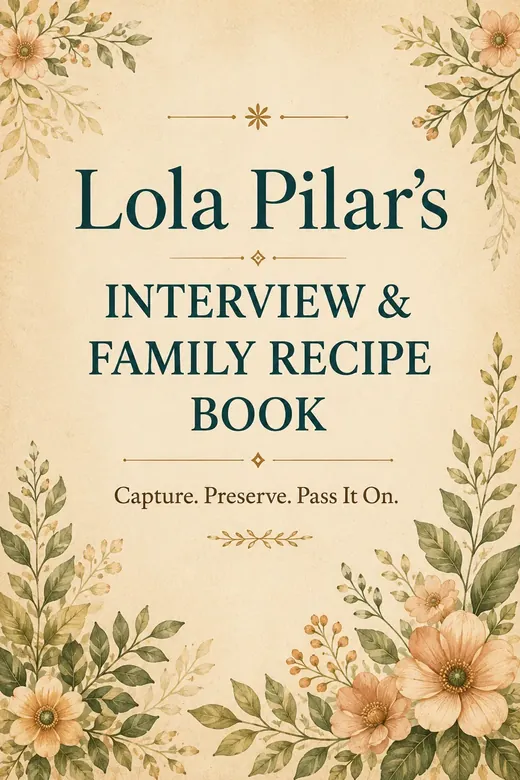
Two PDF books. Read them on your phone, tablet or computer, or print the pages and forms you want.
No account to make. No subscription. Nothing is posted to you.
Look Inside
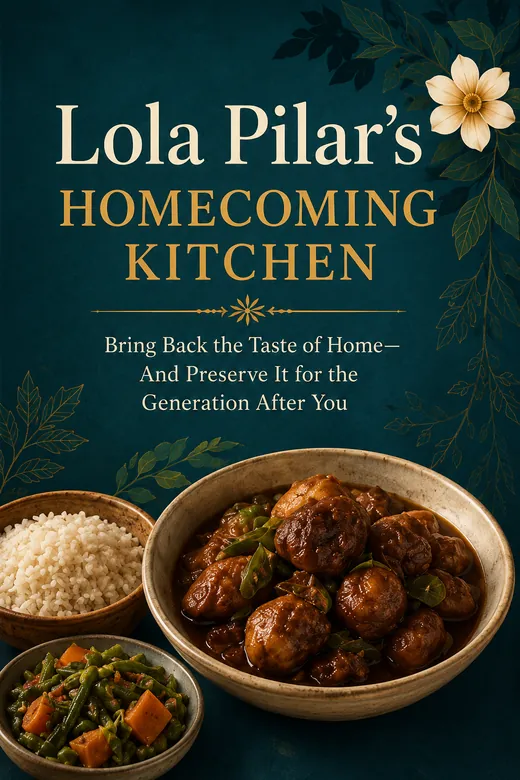
Three samples from Homecoming Kitchen, the main book, before you pay.
From Homecoming Kitchen · Diaspora Swap Matrix
No calamansi where you live
Level
What to use
Best swap
Frozen calamansi juice
Good swap
Key lime with mandarin
Emergency
Lemon with lime
Do not swap
When the floral smell of calamansi is the centre of the dish
Every ingredient gets the same treatment: what it brings to the dish, three levels of swap, when not to swap, what changes in the taste, and where to buy it. Cane vinegar, coconut vinegar, sukang Iloko, patis, Filipino toyo, bagoong alamang and bagoong isda are all in there.
From Homecoming Kitchen · The 36 Recipe Labs
The dishes, section by section
Each one carries sensory cues, family variations, diaspora swaps, what goes wrong, the fix, what to do with leftovers, and a box for your own family's version.
Adobo, a family of methods: chicken, pork, adobong puti, sa gata, sa dilaw
Sour soups: sinigang sa sampalok, sinigang sa bayabas
Pancit and noodles: bihon guisado, canton, palabok, sotanghon
Desserts and kakanin: leche flan, maja blanca, cassava cake
Pickles and sawsawan: atchara
From Homecoming Kitchen · Part II, Preserve It
Thirty days, three to five dishes
Week 1. Map.
Week 2. Observe and capture.
Week 3. Test.
Week 4. Transfer.
The interview follows the cook through six moments: before shopping, while shopping, preparing, cooking, tasting, and after the meal.
The hand-over has four stages: watch, cook together, the learner leads, the learner cooks it alone.
The book counts a dish as preserved only when someone else can make it and the family recognises it. The goal is three to five dishes done well, not the whole kitchen. The workbook turns each week into forms you fill in.
Secure checkout by Gumroad · Download on the next screen · 14-day money-back guarantee
14
Day Guarantee
Cook one dish. If it is not worth it, you get your money back.
Try any recipe. Use the Flavor Fixer. Start the interview workbook. If the set is not what this page said it would be, reply to your receipt email within 14 days and you get a full refund. You keep the books either way.
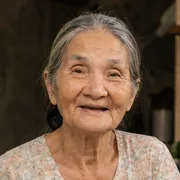
About Lola Pilar
Before the Last Hands That Hold It Are Gone
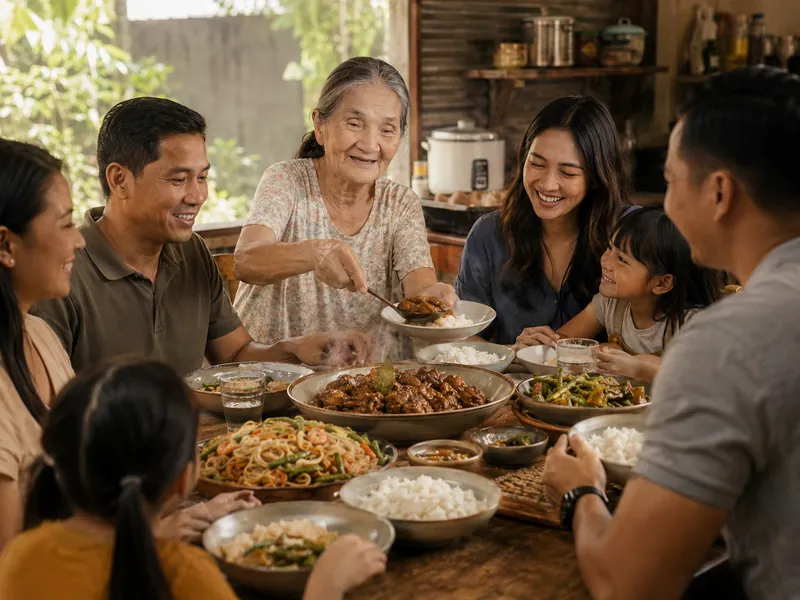
Every Filipino family has a Lola whose adobo tasted different from anyone else's. Who knew exactly when to flip the tortang talong. Who could tell if the sinigang needed more tamarind just by the way the kitchen smelled.
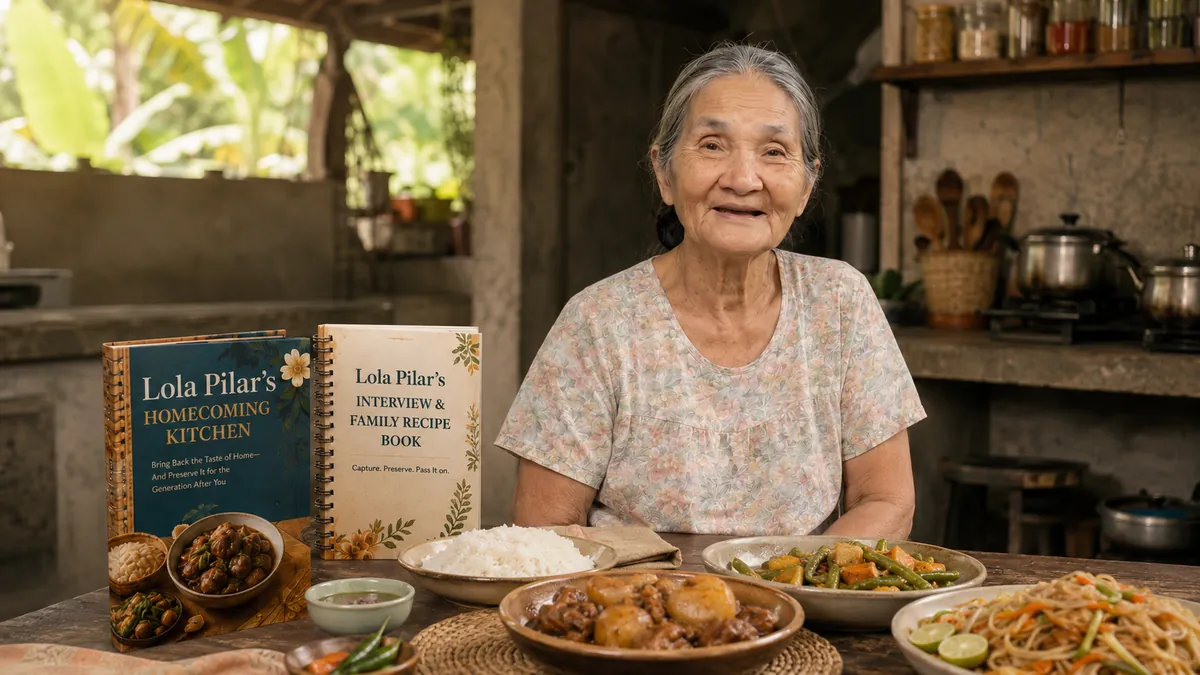
Lola Pilar is that voice — the teaching persona for a generation of Filipino cooks in the diaspora who grew up eating the food but never learned to make it the way she did.
This book doesn't just give you recipes. It gives you a system: recover the taste you remember, then preserve it — interview the cook, capture the decisions, test the result, and pass it on before it's too late.
"The recipe says 'season to taste.' But whose taste? That's what this book is really about."
Mahal, Lola Pilar 🌺
Common Questions
No, and it is better you know that before you pay. It is two PDF files that you open on your phone, tablet or computer as soon as you pay. Nothing arrives by post. You can print any page at home.
A download button appears on the next screen, and the same link is sent to your email. Both PDFs are there. No waiting and no shipping.
If you can read an email, you can read this. You tap the link and the book opens. There is nothing to install and no account to make. The workbook is made to be printed. If a file does not open, reply to your receipt email.
Only in part. It has 36 recipes, not hundreds, and plain Filipino recipes are free all over the internet. Each of the 36 is a "recipe lab": sensory cues, family variations, diaspora swaps, what goes wrong, the fix, leftovers, and a box for your family's version. The second half of the main book and the whole workbook are not recipes at all. They are a system for writing down how your own family cooks, so someone else can cook it later.
The 36 dishes are listed under Look Inside, above. If yours is not there, that is what the second half is for: the questions to ask the person who makes it, and the forms to capture it on. Your family's version is the one that matters here.
Lola Pilar is a teaching persona, the voice of the book and the channel. The book says so on its own pages, and it does not invent the life story of a real grandmother. Its source notes and further reading are listed at the back.
Some are worth the trip and some can be swapped. The Diaspora Swap Matrix goes through them one by one: the best swap, a good one, an emergency one, when not to swap, and what changes in the taste.
No. One payment of $29, one time. There is no membership and no monthly charge.
Reply to your receipt email within 14 days and you get a full refund. You keep the books either way.
Yes. The book is a family project. The interview workbook is designed to be used together with the family cook. Print extra capture forms if you need them.
Make It Taste Like Hers.
The recipes are everywhere. The decisions behind them aren't. These two books hold the part that was never written down.
Take each dish your family would miss and ask three things. How many people can still make it? Is it written down anywhere? How much of it lives in one person's instinct? The dishes with the worst answers come first. That is the Family Kitchen Risk Map, page 61 of the book.