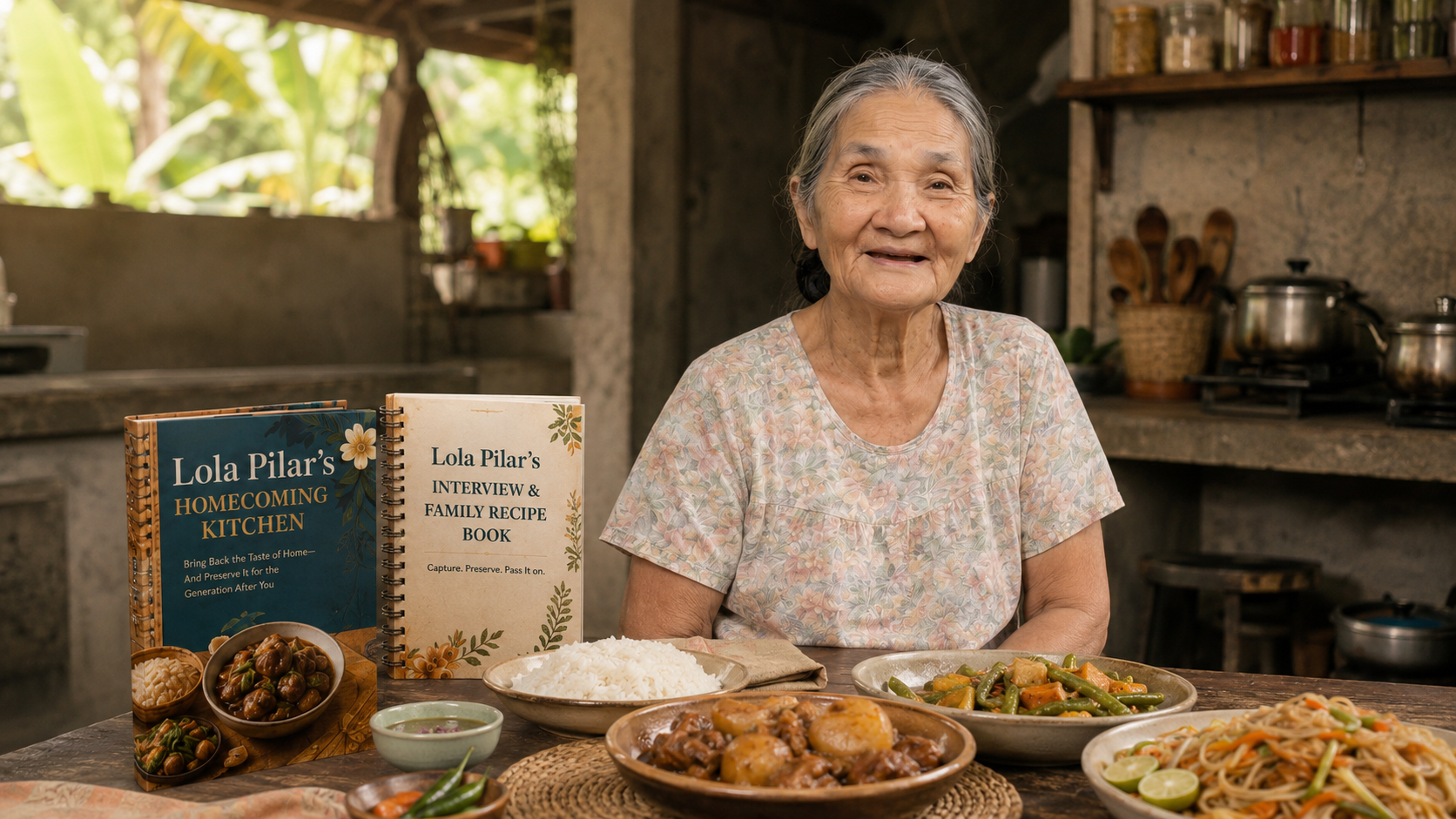
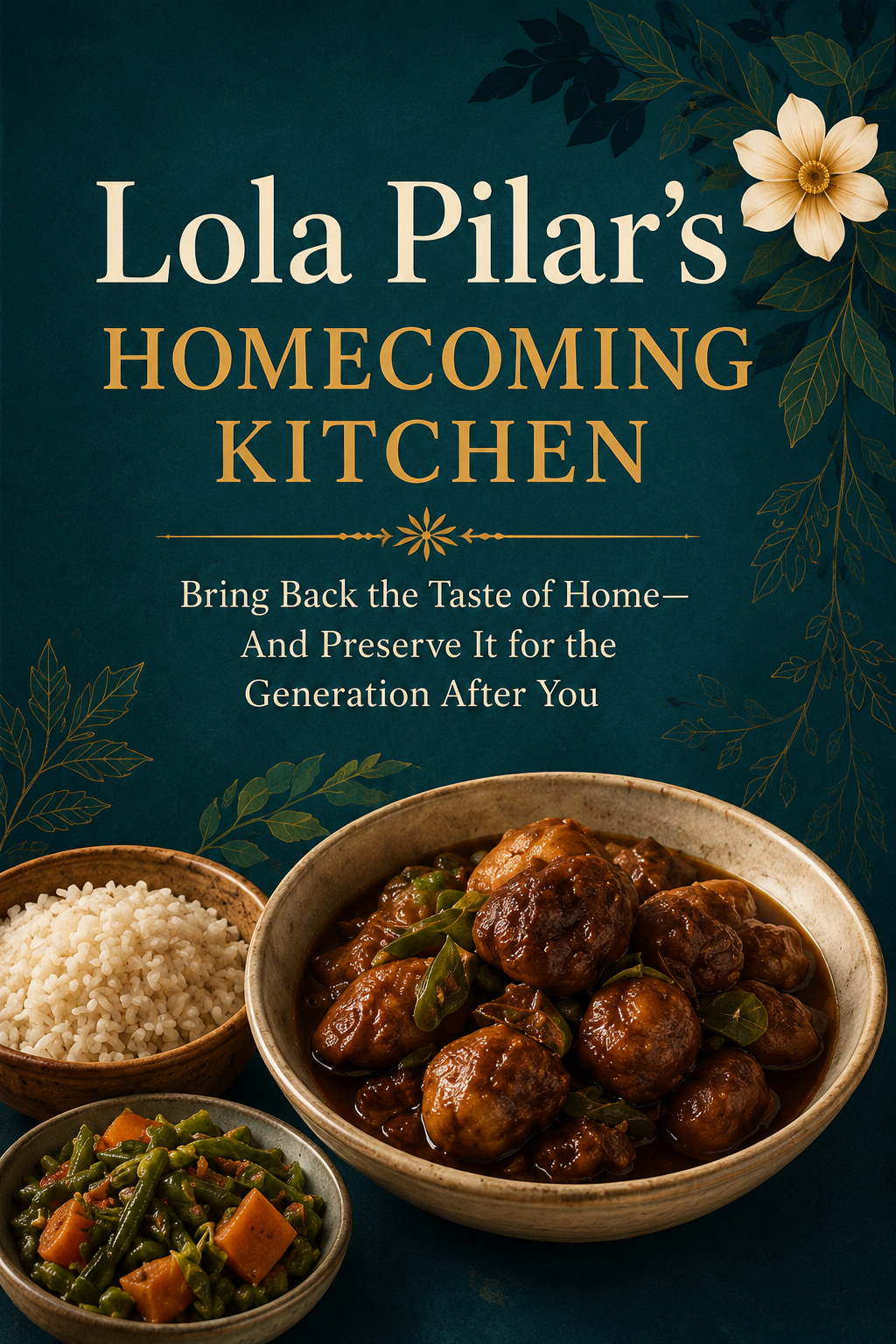
You have the recipe — but it still doesn't taste like hers. The secret was never the ingredients. It's the lutuin hanggang tama na — the timing, the by-feel decisions, and the unwritten rules passed hand to hand in Filipino kitchens. Finally written down.


A quick introduction to what makes this different from every other Filipino cookbook.
MT
DR
RM
HS
GLYour Lola's adobo wasn't great because of a recipe. It was great because of everything she never said out loud.
When to add the vinegar. Why the sauce goes flat after simmering too long. What "cook until right" actually looks like in the pan.
Filipino cooking is sensory — by smell, by sound, by eye. When the garlic turns a particular shade. When the steam changes. This book teaches the senses, not just the steps.
Cook like your Lola did — stretching every ingredient, wasting nothing, turning yesterday's rice into today's sinangag and last night's adobo into tomorrow's fried rice topping.


Two parts. Recover it, then preserve it — before the last hands that hold it are gone.
Five variations of the Philippines' most personal dish.
Tamarind, guava, batwan — and why swapping one changes everything.
Rice noodles, wheat noodles, glass noodles — the universal skill is liquid control.
Rice isn't a side dish — it's the center of the Filipino table.
The weeknight dishes your Lola made without thinking.
Lumpiang Shanghai, turon, bibingka, puto — afternoon treats and party staples.
The dishes that mark a fiesta — the ones that remind everyone why they came home.
Bicolano, Ilocano, Mindanao — the regional voices.
The sweets that end every celebration and start every memory.
Atchara, dipping sauces, and the reference preparations.
Two orders a week for a family, $30–35 each. Delivery fees, tips, reheated lumpia.
The same dishes, made at home. Leftovers become tomorrow's sinangag.
The difference between ordering in and cooking at home, every week.
Your real number depends on how often you order now. Typical, not guaranteed.
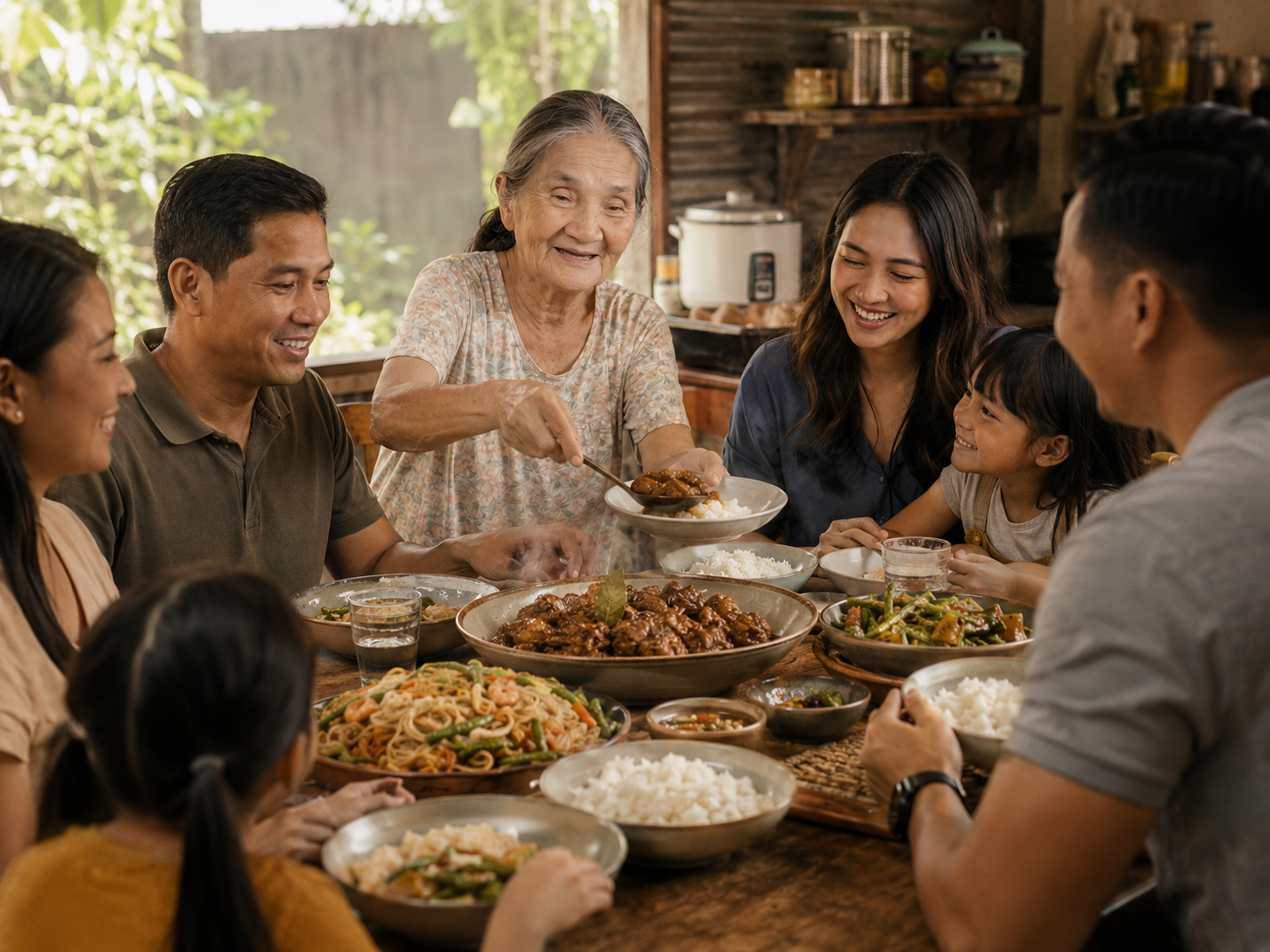
Every Filipino family has a Lola whose adobo tasted different from anyone else's. Who knew exactly when to flip the tortang talong. Who could tell if the sinigang needed more tamarind just by the way the kitchen smelled.
Lola Pilar is that voice — the teaching persona for a generation of Filipino cooks in the diaspora who grew up eating the food but never learned to make it the way she did.
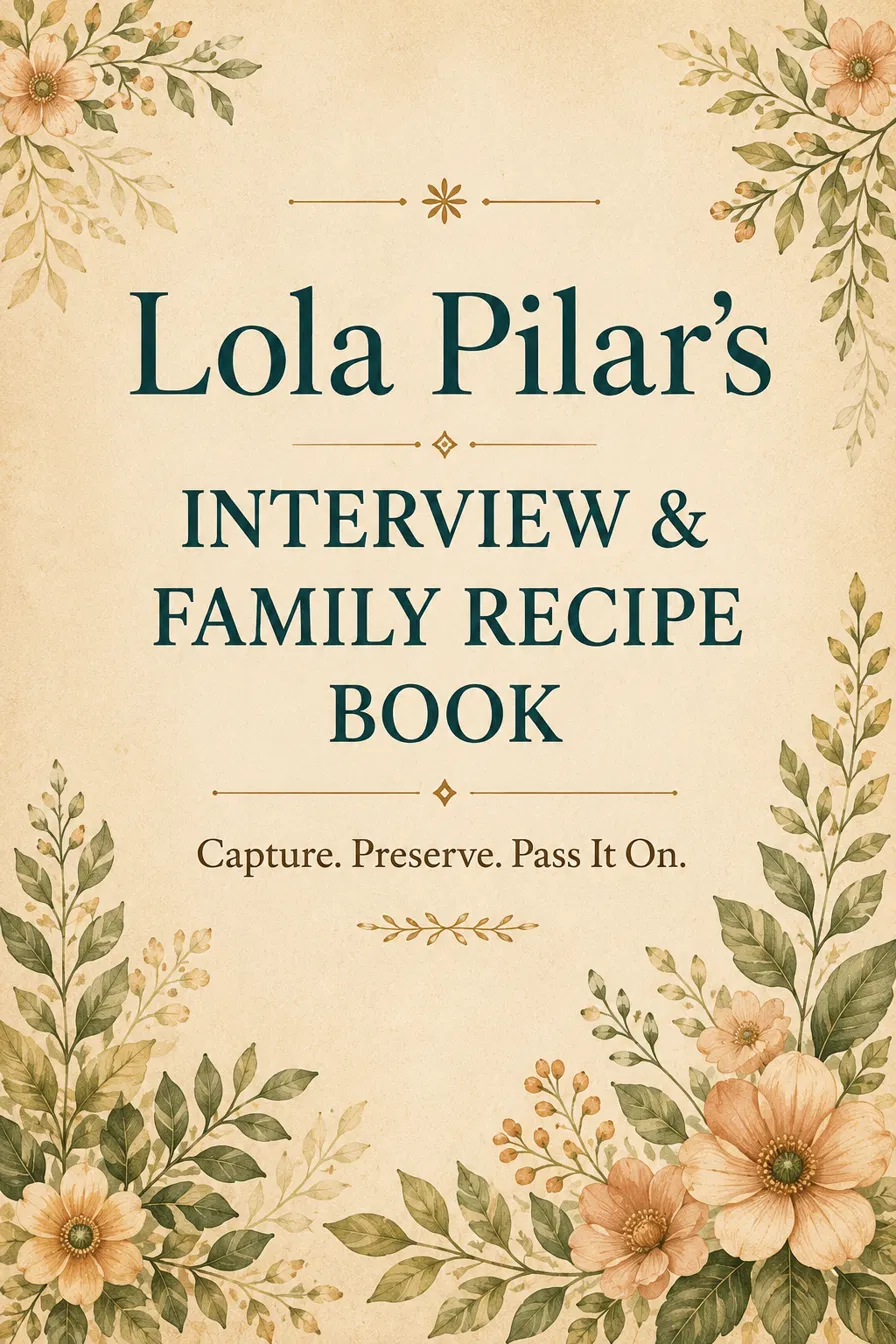
This book doesn't just give you recipes. It gives you a system: recover the taste you remember, then preserve it — interview the cook, capture the decisions, test the result, and pass it on before it's too late.
"The recipe says 'season to taste.' But whose taste? That's what this book is really about."

I've been trying to recreate my nanay's sinigang for twenty years. This book finally explained what I was doing wrong — it wasn't the tamarind, it was the timing.

The Diaspora Swap Matrix alone is worth the price. I live nowhere near a Filipino market. My wife said the adobo tasted like her lola's.

I bought this for my daughter. The interview workbook made us sit down together and actually talk about the food. Best afternoon we've had in years.

My lola passed last year. I wish I'd had this book sooner. But even without her, the Flavor Fixer helped me get the kare-kare right on the second try.

The section on vinegar balance changed everything. I didn't know why my adobo tasted harsh — turns out I was stirring too early.

I've been trying to recreate my nanay's sinigang for twenty years. This book finally explained what I was doing wrong — it wasn't the tamarind, it was the timing.

The Diaspora Swap Matrix alone is worth the price. I live nowhere near a Filipino market. My wife said the adobo tasted like her lola's.

I bought this for my daughter. The interview workbook made us sit down together and actually talk about the food. Best afternoon we've had in years.

My lola passed last year. I wish I'd had this book sooner. But even without her, the Flavor Fixer helped me get the kare-kare right on the second try.

The section on vinegar balance changed everything. I didn't know why my adobo tasted harsh — turns out I was stirring too early.
Try any recipe. Use the Flavor Fixer. Start the interview workbook. If this set doesn't change how you cook Filipino food at home, email us within 14 days for a full refund. Keep the book either way.
The recipes are everywhere. The decisions behind them aren't. This book holds the part that was never written down.
Get the Complete Set — $29 →